
για Ελληνικά πατήστε εδώ
Let us share our joy
The Father is the wellspring of joy, the Son its manifestation and the Holy Spirit its sponsor. (Pope Francis).
The joy of the Gospel fills the hearts and lives of all who meet Jesus.
Whoever accepts his offer of salvation gets liberated from sin, sorrow, inner emptiness and loneliness.
Through Christ, with Him and in Him, joy gets steadily reborn.
The Virgin Mary had a unique experience of that encounter with Jesus, therefore she became the “cause of our joy”.
The bosom of the Virgin characterises the vital function of the Mother of God in our spiritual life, being the Mother, the “place”, the atmosphere where God communicates to us the life of grace.
She keeps us in the spiritual ambience of grace, like a luminous cloud into which we may remain and find protection.
The disciples, in their turn, got the call to follow Jesus and were sent by Him to proclaim the Gospel (Mk. 3, 14) so that their joy may be complete (1 John 1, 4).
On the occasion of the month dedicated to the
Missions, we try to rekindle our participation to the missionary task of the Church.
To that purpose, the practice of regularly praying the Holy Rosary is particularly helpful.
Prayerfully meditating on the Mysteries of the life of Jesus and united to His Mother -and ours, our regard gets cleansed and illuminated and our spirit strengthened.
We will then be able to share our joy with those who still wait to hear the good news of salvation that Jesus brought to the world.
The Parish
The parish is the presence of the Church in a given territory, an environment for hearing God’s word, for growth in the Christian life, for dialogue, proclamation, charitable outreach, worship and celebration. In all its activities the parish encourages and trains its members to be evangelisers. It is a community of communities, a sanctuary where the thirsty come to drink in the midst of their journey, and a centre of constant missionary outreach. We must admit, though, that the call to review and renew our parishes has not yet sufficed to bring them nearer to people, to make them environments of living communion and participation, and to make them completely mission-oriented.
From the Apostolic Constitution Gaudium et Spes (Joy and hope), Vatican II
At the centre of our freedom is the Mystery of God
The church, and even more the Cathedral, i.e. the church where a bishop has his seat, has always been the life centre of the village or the city. With the modern way of living and the wonderfully developed communications technology, the average Christian may not feel the need to go to church with the same strong longing and enthusiasm as in years past.
Everything depends on our way we use our freedom. Within us an abyss of potentialities is contained, a mysterious force that continually pushes us to compare, to evaluate and to choose. Every day, every hour, we make choices, we select, prefer and reject….With the summer break behind us we look forward to the reassuring order of everyday normality. The freedom of the past weeks may have tired us a little, esp. if it lacked a wise order of priorities.
We are free to choose refusal, evil and sin. Our freedom is awesome and mysterious since it can distance us from God, who is our eternal destiny. But even more mysterious and strong is God’s love that surrounds us and offers to us continual opportunities for reform, metanoia, i.e. conversion, good works, charity and love.
Freedom for the Christian is full of meaning and promise. At its centre we meet the mystery of the love of God. It is an invitation totally personal and at the same time universal, i.e. addressed to all. We are all called to follow Christ, to imitate him and to live with him. It is enough for us to be humble, to have a spirit of sacrifice and conversion, to not be self-sufficient or merciless, but to be good managers of God’s gifts.
We are not always aware of it, but freedom means also commitment: “Yes” to the call of God, “yes” to unconditional Love!
Saint Galatiané
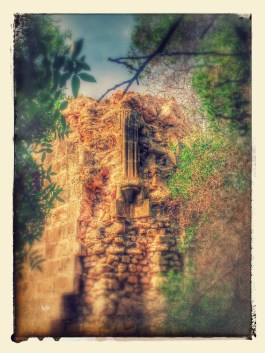 About two hundred meters from the harbour, on the main street leading to the sea, there are the remnants from a Catholic church the Venetians built in Paphos. They remain a living witness of faith of the generations that have passed through Cyprus.
This church was dedicated to Haghia Galatiané, or, Our Lady of the Milk. Mothers who had not enough milk to give to their infants would come and pray here; they would also make some mud from the surrounding soil of the earth and smear it to their breasts in order to induce the flow of milk.
Although the Catholic Church was banned on the island by the Ottoman conquerors in 1571, things have very much changed since and, nowadays, a lively Catholic community lives and works in Paphos, numbering a few hundred, not only Cypriots but from various other countries of the planet.
Did you know…
Freedom is a “possession” for which a lot of ink has flown and, regrettably, a lot of blood has been shed too. Freedom is a two-way notion, namely, freedom from something that is perceived as bad or negative, and freedom for doing something considered good or desired.
The etymology of the Greek word for “freedom”, (“eleutheria”), indicates that it is linked to an aim, a purpose or a destination. It is derived from the word “eleusis” (=arrival), from the verb “erchomai” (to come).
Therefore, “freedom”, linguistically -in Greek, is linked with that which it wishes to reach! It is for this very reason that the really free person is prepared and chooses to make sacrifices in order to reach his goal. As the language is woven into our subconscious (collective and personal) we see that “freedom” in Greek has a positive bias!
It is a common saying that one’s freedom stops where the next person’s freedom begins. This has to be a norm in every well-regulated society. Refusal to follow this simple rule goes against common sense and the good will upon which durable communities are built.
Saint Paul wrote to the Corinthians: Therefore, if food makes my brother stumble, I will never eat meat, lest I make my brother stumble (1 Cor. 8, 13). Our faith tells us that we are created with free will hence we are responsible for our choices.
Authentic Christian freedom is a road which leads away from the slavery of selfishness and sin and toward the building up of a world of solidarity and mutual respect.
Christ at the centre
 The nature of the Church is not political, but essentially spiritual. It is the people of God, the holy people of God who are marching towards meeting Jesus Christ. Only within this perspective may one understand what the Catholic Church does.
Christ is the Church’s Shepherd, but His presence in the history of the Church passes through man’s freedom. Among the people of God a man is chosen to serve as His Vicar, as the successor of Peter.
The centre is Christ, it is not the successor of Peter. Without Him neither Peter nor the Church would exist, nor would they have any reason to exist.
Pope Francis, Rome 16/3/2013
The Roman Pontiff, as the successor of Peter is the perpetual and visible principle and foundation of unity of both the bishops and of the faithful.
Lumen Gentium, 23, Vatican II
Saint Francis of Assisi
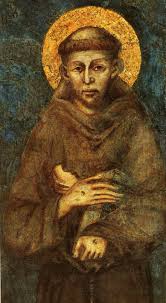 Disarming simplicity and voluntary radical poverty for the love of Christ characterise Saint Francis of Assisi. Moreover, he worked tirelessly for the good of the Church and the spread of the Gospel to the non-Christian world.
A great figure among the Saints of the Church, Saint Francis of Assisi reminds us that what is most important is to live according to the call of God Who has His plan personally for each one of us.
He discovered his call only after a long time dedicated to insistent prayer, asking the Lord to help him discern His will for him.
He lived by the end of the 12th century, (1182-1226), the time of the Crusades, a troubled period when many Italian cities were at arms against each other, the heresy of the Cathars was misleading people in Spain and the South of France and the Church was in crisis from within and from without.
One day as he was deep in prayer at the feet of the Crucifix in the dilapidated chapel of Saint Damian, near Assisi -Italy, an interior voice was addressed to him: “Francis, go and rebuild my house that is falling to ruins”. Francis, initially, took the command to the letter and attempted to repair the small chapel; his efforts, however, led him to finally found three orders, namely the Order of Friars Minor, o.f.m. (the Order of the Little Brothers), the Order of the Poor Dames (Poor Claires) and a Third Order for lay people engaged in the world, men and / or women, married or not.
His influence was great. Through his example, his words and his work Saint Francis and his brothers praised God’s love and the holy way of life. They were preaching everywhere: on the streets, at the squares, on the castles’ walls, in the churches.
His love for Christ made him travel as far as the Holy Land and Egypt where he tried to convert the Sultan of Damietta. To Saint Francis we owe the founding of the Custody of the Holy Land which started in Saint John of Accra in 1218.
In September 1224 and while he was deep in prayer he received the stigmata (the five wounds of Christ on the Cross).
Saint Francis of Assisi was canonised (declared a saint) on 16 July 1228 by Pope Gregory IX. His feast day is on October 4th. His love for spontaneous hymns praising God mark the beginning of Italian verse and, justly, he is considered the precursor of Dante
The Poverello of God
Love and piety and admiration for the hero and great martyr possessed me as I was writing this tale, more true than reality; big tear drops often smudged the manuscripts, as if a hand with a renewed wound caused by being nailed, eternally nailed was passing in front of me in the breeze; as I was writing I was feeling its invisible presence all around me.
Because to me Saint Francis is the prototype of man militant, who with incessant and most cruel strife he manages to bring about the highest duty of man, higher than morality and truth and beauty, namely to alter the substance of the matter with which God entrusted him into spirit.
(From the prologue of “The Poverello of God” by the Greek writer N. Kazantzakis, 1953)
click here for Greek


One thought on “in the Church’s bosom”