The Holy Roman Empire

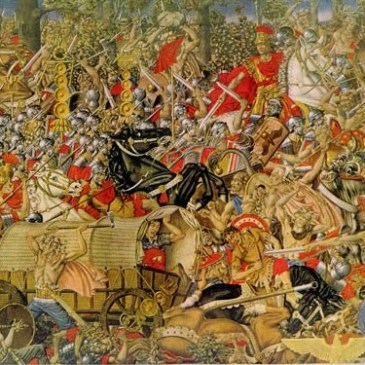
κάνετε κλικ εδώ για Ελληνικά Charlemagne Three great men, three decisive steps into the formation of the West in the eighth century of the Christian era: Charles Martel, who stopped the Arab expansion at Poitiers in 732 A.D., his son Pepin III the Short, who supported the Church of Rome against the Lombards and who … More The Holy Roman Empire

The Church keeps her independence

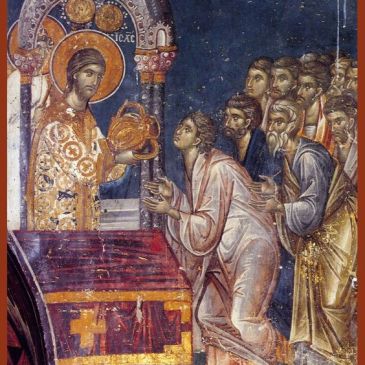
  The donation of Pepin κάνετε κλικ εδώ για Ελληνικά Iconoclasm, i.e. the conflict about the icons, (726-843 A.D.) had devastating consequences for Byzantium: the prestige of the emperor was damaged, the state was weakened, the art suffered, the iconography got standardized through strict rules which excluded spontaneity and new styles and its relation with … More The Church keeps her independence

Hope and desire

Exercise of desire κάνετε κλικ εδώ για Ελληνικά The Western world sometimes seems to ignore that it is rooted in our centuries old Christian tradition; its emphasis on the importance of individual desire and freedom of choice, on the community level as well as the personal, is viewed as a fundamental “right”. The Christians are … More Hope and desire

A love story

Old as the Creation, new like each dawn κάνετε κλικ εδώ για Ελληνικά (The content has been first published in Greek, in the September 2009 issue of the Informative Bulletin of the Paphos Latin Parish). It has been said that the Holy Scripture is the love story between God and His People. Indeed, the sacred texts, … More A love story

Bread and Wine

κάνετε κλικ εδώ για Ελληνικά In the Greek language the word artos (άρτος) means bread and is derived from the verb ar-ar-isko (αρ-αρ-ίσκω) i.e. to prepare, to connect; therefore, artos points to the procedure (kneading, baking) of bread making. Since artos describes the most basic human (type of) food it might belong to a linguistic sub-layer … More Bread and Wine

Spiritual unity, geographical division

κάνετε κλικ εδώ για Ελληνικά Defenseless city? In the 4th century AD another historical event took place which – although was not directly involving the life of the Church played a pivotal role in its future development. In 330 AD the Emperor Constantine the Great decides to transfer the capital of the Empire to Byzantium, … More Spiritual unity, geographical division

Catholicity of Faith and heresies

κάνετε κλικ εδώ για Ελληνικά Clarifications The fourth century of our era signals the official recognition of the Christian Faith as having equal status with the other religions which were tolerated in the Roman Empire, namely the Greek-inspired paganism and the religion of Mithra. At the beginning of the 4th century the Christian population in the Empire has … More Catholicity of Faith and heresies